Powering a Sustainable Farming Future with Advanced Battery Technology
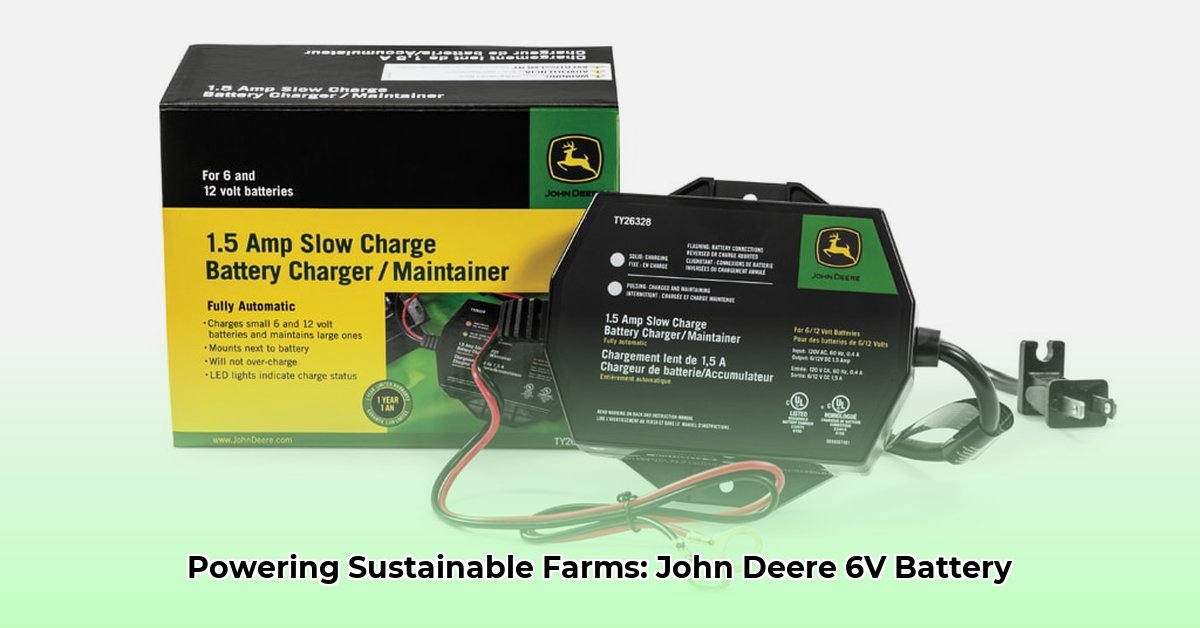
The humble John Deere 6-volt tractor battery, while a crucial component of older equipment, symbolizes a pivotal shift in agriculture. Sustainable farming demands efficient and environmentally friendly power solutions, and advancements in battery technology are at the forefront of this transformation. This article explores the evolving landscape of agricultural electrification, examines different battery technologies, and outlines actionable steps for farmers, manufacturers, and policymakers to embrace a greener future. For more on classic John Deere tractors, see this resource.
The Green Revolution in Agriculture: Electrification's Promise
Modern agriculture faces mounting pressure to reduce its environmental impact. Greenhouse gas emissions from farm machinery significantly contribute to climate change. Electrification offers a promising pathway to mitigate this, with electric tractors and other equipment offering a substantial reduction in fossil fuel reliance and associated emissions. However, this transition presents challenges that require careful consideration and proactive solutions. Will the transition to electric agriculture be cost effective in the long run?
Battery Technologies: Weighing the Pros and Cons
The ideal battery for agricultural machinery must meet stringent requirements: durability to withstand harsh conditions (dust, mud, extreme temperatures), extended lifespan to minimize downtime and replacements, and cost-effectiveness. Several battery technologies are vying for dominance:
Lead-acid batteries: Familiar and relatively inexpensive, but suffer from lower energy density and shorter lifespans compared to newer technologies.
Lithium-ion batteries: Currently dominant in the electric vehicle market, lithium-ion batteries offer higher energy density and longer lifespans but are more costly. [Dr. Anya Sharma, Lead Researcher at the National Renewable Energy Laboratory] notes that while "Lithium-ion technology is currently the frontrunner, its long-term sustainability needs careful evaluation given resource constraints."
Solid-state batteries: Promising even greater energy density and improved safety, solid-state batteries are still under development and not yet commercially viable on a large scale for farm equipment.
Each technology presents trade-offs between initial investment, operating costs, and environmental impact.
Actionable Steps for a Sustainable Transition
Successfully transitioning to electric farming requires a collaborative effort. The following table outlines actionable steps for key stakeholders:
| Stakeholder | Short-Term Actions | Long-Term Actions |
|---|---|---|
| Farmers | Assess energy needs; explore battery leasing options; prioritize energy-efficient practices. | Invest in electric equipment as financially feasible; implement precision farming techniques to optimize energy use. |
| Manufacturers | Improve battery durability and lifespan; reduce battery production costs; develop robust battery management systems. | Invest in R&D for advanced battery chemistries (e.g., solid-state); create sustainable battery recycling programs. |
| Policymakers/Governments | Offer financial incentives (tax credits, subsidies); invest in charging infrastructure development. | Support research into battery technologies; enforce stricter emission standards for farm equipment; implement regulations for responsible battery disposal. |
Choosing the Right Electric Tractor Battery: A Practical Guide
The choice of electric tractor battery is crucial. It will determine the tractor's performance, lifespan, and overall sustainability. Key factors impacting the optimal choice include:
Battery Chemistry: Lithium-ion is currently the prevalent choice for its high energy density. However, the long-term environmental impact of lithium extraction needs further consideration.
Capacity (Amp-hours): This directly impacts the tractor's operating time before needing a recharge. Farmers should carefully assess their daily operational needs to select a battery with sufficient capacity.
Charging Infrastructure: Access to reliable and sustainable charging is paramount. This may involve investing in on-farm solar power or integrating with the existing power grid.
Battery Management System (BMS): A sophisticated BMS is essential for extending battery lifespan and protecting against damage.
Navigating Challenges and Embracing Opportunities
The transition to electric farming is not without challenges. High initial costs, limited range of electric tractors, and uncertainties regarding long-term battery performance and disposal/recycling are significant considerations. However, this transition also presents substantial opportunities, ranging from reduced operating costs and environmental benefits to technological advancements and job creation in manufacturing and related industries.
Key Takeaways:
- Electrifying farms is crucial for environmental sustainability, but it requires cautious planning.
- Selecting the right battery will be key for operational efficiency and cost effectiveness.
- Cooperation between farmers, manufacturers, and policymakers will aid a successful transition.
- Addressing potential challenges proactively will ensure a smooth and efficient changeover. How can we accelerate the development and adoption of more sustainable battery technologies for farm equipment?